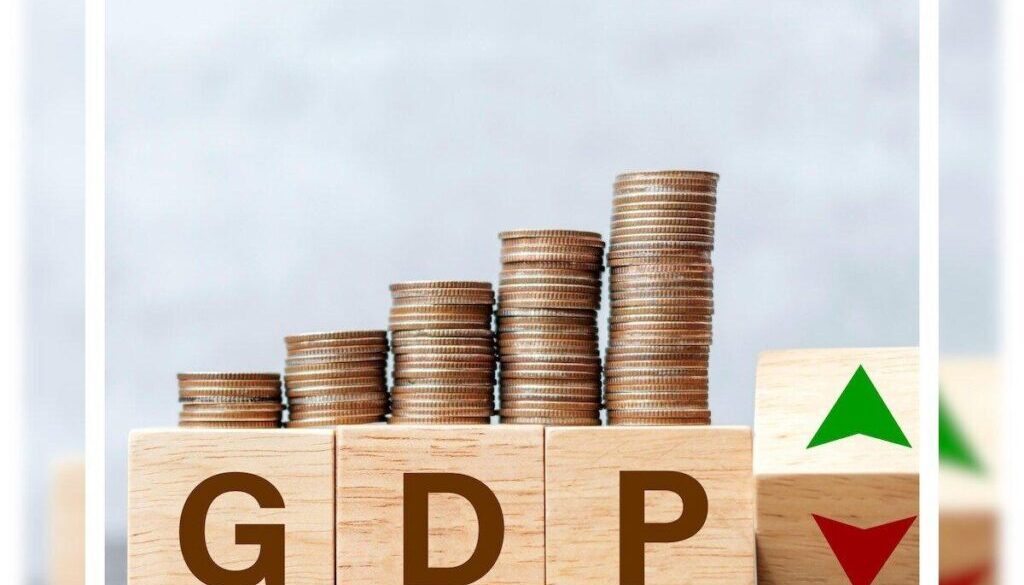
- GDP growth hides rising inequality and risks
- Wealth concentration weakens democratic institutions
- True prosperity demands smarter, broader metrics
For over half a century, gross domestic product (GDP) has reigned supreme as the gold standard for measuring economic performance. From central banks to finance ministries, from IMF reports to national development plans, the GDP figure is often treated as a definitive metric of success. When a country records robust GDP growth, leaders celebrate; when the number falters, alarm bells ring. Yet, a deeper examination of this entrenched metric reveals that GDP, while useful, is increasingly inadequate—and, at times, harmful—as a singular measure of progress, especially in regions such as the Arab world where the socio-economic landscape is complex and evolving.
GDP: From Precision Tool to Political Crutch
The intellectual foundation of GDP lies in its simplicity. Designed by economist Simon Kuznets in the 1930s, GDP offers a concise numerical summary of a nation’s annual production—essentially the market value of all goods and services created within a year. It approximates income generation and economic scale, offering governments a standardized framework for comparison across borders and time.
As Diane Coyle outlines in her history of GDP, the metric’s introduction brought discipline to economic policymaking. It allowed countries to move beyond subjective indicators such as infrastructure projects or trade volume and adopt a clear, empirical baseline. In a globalized economy, this was no small feat.
But over the decades, GDP has evolved from an analytical tool into a political shield. Its authority often allows policymakers to deflect criticism about inequality, unemployment, or environmental degradation, citing growth statistics as evidence of national advancement. In practice, however, GDP growth can conceal as much as it reveals.
e Mirage of Shared Prosperity
GDP’s most troubling limitation is its indifference to distribution. A country can experience rising GDP per capita while the majority of its population faces declining living standards. This is not merely a theoretical concern. In many economies, particularly those heavily reliant on oil or elite-driven sectors, a surge in GDP might enrich a narrow segment of society while leaving structural inequalities untouched.
Nobel laureate Joseph Stiglitz addressed this fallacy in his 2010 book *Freefall*, arguing that “a larger pie does not mean everyone—or even most people—get a larger slice.” In the Arab world, this rings especially true. From North Africa to the Gulf, several countries have recorded strong GDP growth even as youth unemployment remains stubbornly high, labor force participation among women lags, and the wealth gap expands.
In 2008, the Commission on the Measurement of Economic Performance and Social Progress—led by Stiglitz, Amartya Sen, and Jean-Paul Fitoussi—called for an overhaul of how we measure national success. They urged governments to integrate data on inequality, poverty, and well-being into national accounts. Yet, despite widespread endorsement, GDP’s grip on public policy and investor perception remains unyielding.
When Wealth Speaks Louder Than Citizens
Beyond its blind spots on equity, GDP-centric thinking may inadvertently corrode democratic governance. As wealth becomes more concentrated, so too does influence. In the digital age, where visibility equates to power, those with capital can shape narratives, amplify ideologies, and steer public discourse. The analogy to feudal societies—where elites dominated not just economies but conversations—has found a modern parallel.
In today’s world, a handful of ultra-wealthy individuals and tech conglomerates wield disproportionate control over what billions see and hear. The risk is not simply inequality, but the marginalization of voices and perspectives that lack economic heft. When policymaking begins to reflect the priorities of the wealthy rather than the collective good, the democratic fabric frays.
This concern is hardly abstract. Across the Arab region, calls for transparency, accountability, and citizen engagement have grown louder, particularly among youth. Yet, in many cases, public policy continues to be shaped in boardrooms and ministerial halls where GDP figures dominate discussions, and societal well-being is relegated to footnotes.
Climate at the Margins of Metrics
Perhaps the most critical blind spot of GDP is its indifference to sustainability. Activities that deplete natural resources, pollute the air, or exacerbate climate change can all contribute positively to GDP in the short term. In effect, a nation can boost its GDP by cutting down forests, burning fossil fuels, or engaging in overfishing—practices that undermine long-term prosperity.
For oil-producing countries in the Arab world, this presents a conundrum. Hydrocarbon exports remain central to GDP calculations and fiscal revenues. Yet, the same activities contribute to climate vulnerabilities—desertification, water scarcity, and extreme weather—that threaten the region’s future.
The urgency of climate action has been widely acknowledged, including by Arab central banks and financial institutions now integrating ESG frameworks and green finance tools. However, until GDP is adjusted—or supplemented—to account for environmental depletion, progress will remain partial and performative. As UN Secretary-General António Guterres noted in his 2021 report *Our Common Agenda*, “What we measure shapes what we do.”
Why the Arab World Needs New Metrics
In light of these structural issues, the Arab region must revisit the foundations of how it defines economic success. Policymakers, economists, and banking leaders cannot afford to rely exclusively on GDP when charting national development or formulating fiscal strategies.
There is no shortage of alternatives. The United Nations Human Development Index (HDI), the World Bank’s Shared Prosperity Indicator, and the OECD’s Better Life Index offer multidimensional views of progress. These indices incorporate life expectancy, education, access to services, environmental quality, and income distribution.
Regional institutions can take the lead in adapting these frameworks to local realities. A tailored “Arab Prosperity Index,” for instance, could blend conventional economic indicators with metrics on social cohesion, climate resilience, digital inclusion, and governance quality. Such a tool would not only offer a more truthful account of regional progress but also help restore public trust in economic institutions.
Recommendations for Arab Banking and Policy Leadership
As stewards of the region’s financial architecture, Arab banks and central banks have both the capacity and the responsibility to champion more inclusive and forward-looking economic indicators. Here are three core recommendations:
- Promote Holistic Reporting Standards: Encourage financial institutions to publish impact reports that go beyond profitability and incorporate social, environmental, and governance metrics. Linking lending decisions and risk assessments to broader societal outcomes can drive systemic change.
- Support National Statistical Reforms: Partner with governments to expand the capacity of national statistics agencies, enabling the collection and analysis of multidimensional data—from income inequality to environmental degradation.
- Champion Regional Benchmarking Tools: Collaborate with Arab League entities, sovereign wealth funds, and development banks to create region-specific progress indices that reflect the unique priorities and challenges of Arab societies.
Recalibrating our understanding of economic success is no longer a matter of academic preference. It is an imperative. The costs of our GDP obsession—social fragmentation, democratic erosion, and ecological damage—are already evident. The time has come to redefine prosperity on terms that reflect the full complexity of our societies and the future we wish to build.