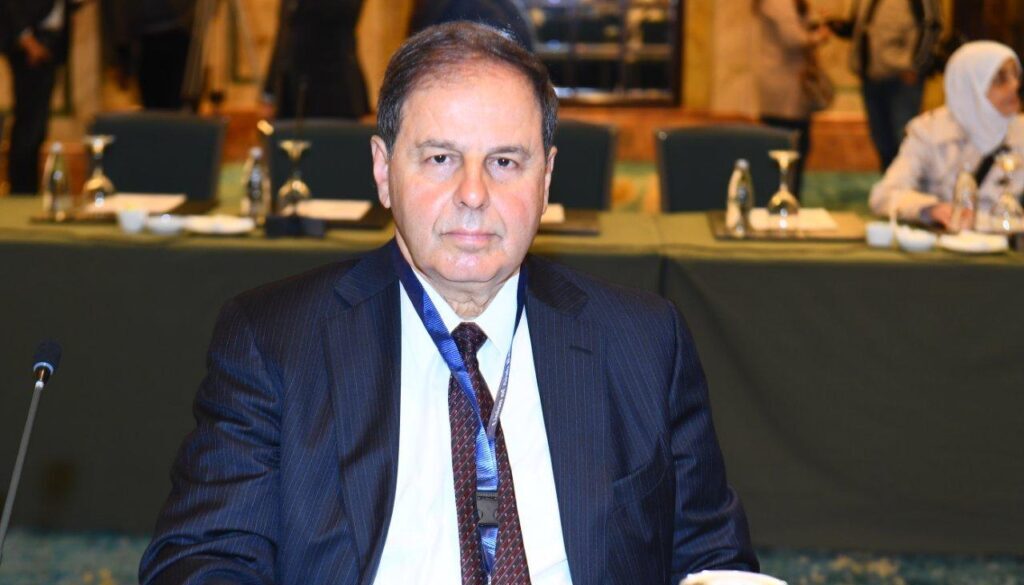
From the courtrooms of Beirut to the main table Boardrooms of global banks, Chahdan Jebeyli has spent four decades helping Arab banks elevate their adherence to law, international Standards, ethics, and trust
On an October morning in 2025, anticipation filled the NY headquarters of Bank of NY. Top U.S. banking regulators and senior executives from leading USA and Arab banks and central banks had gathered for a high-stakes dialogue on financial compliance and on advancing our collective efforts in combating financial crimes. At the center sat Chahdan Jebeyli — poised, composed, ready and guiding the discussion as moderator of two high level panels of a U.S.–MENA Private Sector Dialogue panel.
Sunlight filtered through the windows on the 17th floor, glinting off polished panels and illuminating the faces of the participants as Jebeyli steered the conversation — bridging two worlds with lots of knowledge and a calm authority. He needed no flamboyance to command attention; his quiet confidence, sharp intellect, and decades of cross-cultural experience spoke for themselves.
In that room, a Lebanese jurist-turned-banking expert once again fulfilled his life’s calling: connecting Eastern and Western perspectives through the shared language of law and integrity. For those present, Jebeyli’s presence on that stage was a fitting symbol of his career — a refined yet resolute figure assisting Arab banking meet global standards in the fight against financial crimes.
Foundations in Law
Such composure did not emerge by chance. Jebeyli’s journey began in the judges’ chambers of Beirut. In the mid-1980s, amid Lebanon’s civil conflict, he served as a magistrate deciding on civil and commercial courts cases. That early experience grounded him in the rule of law and instilled a deep respect for justice, analytical reasoning, and doing the right thing irrespective of personal gain—an attribute that has remained with him throughout his entire career..
An ambitious scholar, he later pursued an LL.M. in International Banking Law at Boston University. For a time, he practiced in New York and Massachusetts, absorbing the nuances of U.S. legal culture before returning to the Middle East with a valuable bicultural perspective.
“Understanding both sides of the equation,” he would later say, became an indispensable strength as he transitioned from the bench to the law of banking world.
Career Journey
Jebeyli’s shift into banking began in 1995 when he joined the Saudi American Bank (SAMBA) — then a subsidiary of Citibank — as General Counsel and Head of Legal and Compliance for the Group. In Riyadh, he built SAMBA’s compliance function from the ground up, implementing international AML/CFT standards within a local context and steering the bank through major transitions, including Citibank’s withdrawal from SAMBA.
He led complex litigation and recovery efforts, successfully reclaiming hundreds of millions of dollars in distressed assets following a major merger. His achievements in Riyadh made him a natural candidate for a global role at Citibank. In 2003, he became Managing Director for Legal and Compliance for Citibank’s entire Middle East, Turkey, Pakistan and South and North Africa — the first in his field in the region to reach that rank within the bank.
He oversaw teams from the countries of coverage, while maintaining continuous coordination with both U.S. and regional regulators. Under his guidance, Citibank MENA established a coherent regional compliance framework. He also advised local authorities on aligning with extraterritorial U.S. regulations. Colleagues recall his rare ability to translate Washington’s complex legal language into actionable guidance — a hallmark of his leadership. His strong Arab belonging helped him forge what is suitable for both the international and regional banking community. He was very proud of building and supporting teams of local skilled resources, many of whom became industry leaders in their countries. “I am very proud of what they are and the difference they made in their country,” Jebeyli says.
In mid-2007, Jebeyli returned to Lebanon as Group Chief Legal and Compliance Officer at Bank Audi. Over the next 14 years, he worked on transforming Audi’s governance and risk culture across its diverse geographic presence — spanning Lebanon, Egypt, Turkey, Syria, Qatar, Sudan, Saudi Arabia, UAE and Europe. He helped building legal and compliance teams in every market.
During his tenure, Audi’s compliance staff more than doubled, reflecting heightened regulatory expectations. Yet compliance never became an obstacle — under Jebeyli, it became a strategic enabler. Mergers, new product launches, and cross-border deals proceeded confidently because legal risks were managed from inception.
Colleagues saw him as both “the auditor at the table” and a trusted strategist — firm yet pragmatic.
When he stepped down in 2021, retirement could have been the natural next step. Instead, he returned to the legal field as Chairman of Beirut Law Firm (BLF) and an Adviser to the Group at Audi on Legal and Compliance. Today, he advises on complex disputes, regulatory frameworks, and arbitration cases, serving as a consultant to banks and policymakers across the Gulf and beyond. He also serves as a Lecturer in Capital Markets Law at the Lebanese Institute of Judicial Studies, offering this contribution as a gesture of gratitude to the institution that played a meaningful role in shaping his personality and his professional and academic path.
His path — from judge to global banker to legal statesman — reflects an enduring mission: to strengthen institutions through the marriage of law and finance.
Regional Cooperation and Influence
Beyond his formal roles, Jebeyli has long been a cornerstone of the Union of Arab Banks (UAB) community, quietly shaping the region’s compliance landscape. He assisted in establishing the UAB’s Compliance Officers Committee and later served for five years as Head of the World Union of Arab Bankers’ Group of Certified Compliance Professionals. Through these roles, he fostered open dialogue among compliance leaders on critical issues ranging from anti–money laundering to global taxation, data protection, sanctions and terrorist financing.
In Lebanon, he chairs the Compliance Committee of the Association of Banks in Lebanon (ABL) with focus on AML/CFT, convening compliance heads from across the sector. When the US introduced new sanctions, he was the voice of reason — urging calm and stressing that adherence to international rules was essential to preserving Lebanon’s banking connectivity. “We respect the laws,” he reminded colleagues, emphasizing that Lebanon’s dollarized economy relies on maintaining correspondent relationships, the key to maintaining Lebanese and Lebanon link with the world.
With his contribution, Lebanon’s central bank and commercial institutions cooperated with UAB and ABL channels to fit global directives into the local rules. Many insiders note that under the important leadership and umbrella of the UAB, Jebeyli’s steady counsel—together with the broader compliance community—helped in maintaining correspondent banking relationships.
His influence also extends to dispute resolution. As a member of the UAB’s Arbitration and Mediation Center, he advised on mediating complex cross-border banking conflicts and trained young lawyers in arbitration techniques. His advocacy for out-of-court settlements has helped nurture a more collaborative compliance mindset across Arab banks.
From Morocco to Oman, young compliance officers study frameworks shaped by his early work — a reflection of how deeply his approach has taken root. Wherever Arab finance intersects with international regulation, Jebeyli is often present — translating, guiding, and uniting.
Global Outlook and Leadership
If one theme defines Jebeyli’s career, it is his ability to move effortlessly between regional and global spheres. A Lebanese national with dual U.S. citizenship, he has lived and worked in Beirut, Paris, New York, Boston, Riyadh, Dubai, and Cairo. Over the years, he has advised governments and banks in more than 15 countries, cultivating a network that spans continents and cultures.
Equally comfortable discussing New York’s AML statutes or Paris’ data privacy regulations, he became a trusted bridge between regulators and institutions. At Citibank, he helped guiding Arab regulators in modernizing their frameworks; at Audi, he reassured international correspondent banks of Lebanon’s commitment to compliance.
In one notable example, he delivered a presentation at the Federal Reserve Bank of New York on beneficial ownership transparency — distilling complex U.S. compliance concepts for an Arab and U.S. audience. He also played a role in assisting the establishment of the MENA Financial Crime Compliance Group (MENAFCCG) under UAB. He was consistently present as a speaker and contributor at the MENA Private Sector Dialogue events in NY.
Jebeyli serves on the Board of Audi Capital in Saudi Arabia (chairing its audit committee) and served on the Board of Odea Bank in Turkey (Chairing its ESG committee). These directorships not only reflect trust in his governance expertise but also broadened his understanding of varied regulatory landscapes. Business-savvy and skilled at striking the right balance between commercial priorities and compliance, he firmly believes in building durable, long-term revenues.
He is a member of the Beirut Bar Association, the New York State Bar, and the International Bar Associations, as well as a Chartered Arbitrator affiliated with London-based institutions — further testament to his global standing.
For Jebeyli, the lesson is simple: a bank in Beirut and in the Arab world, must meet the same compliance standards as one in London or New York if it aspires to global relevance. His career embodies that philosophy — blending local insight with international rigor to position Arab banks confidently on the global stage.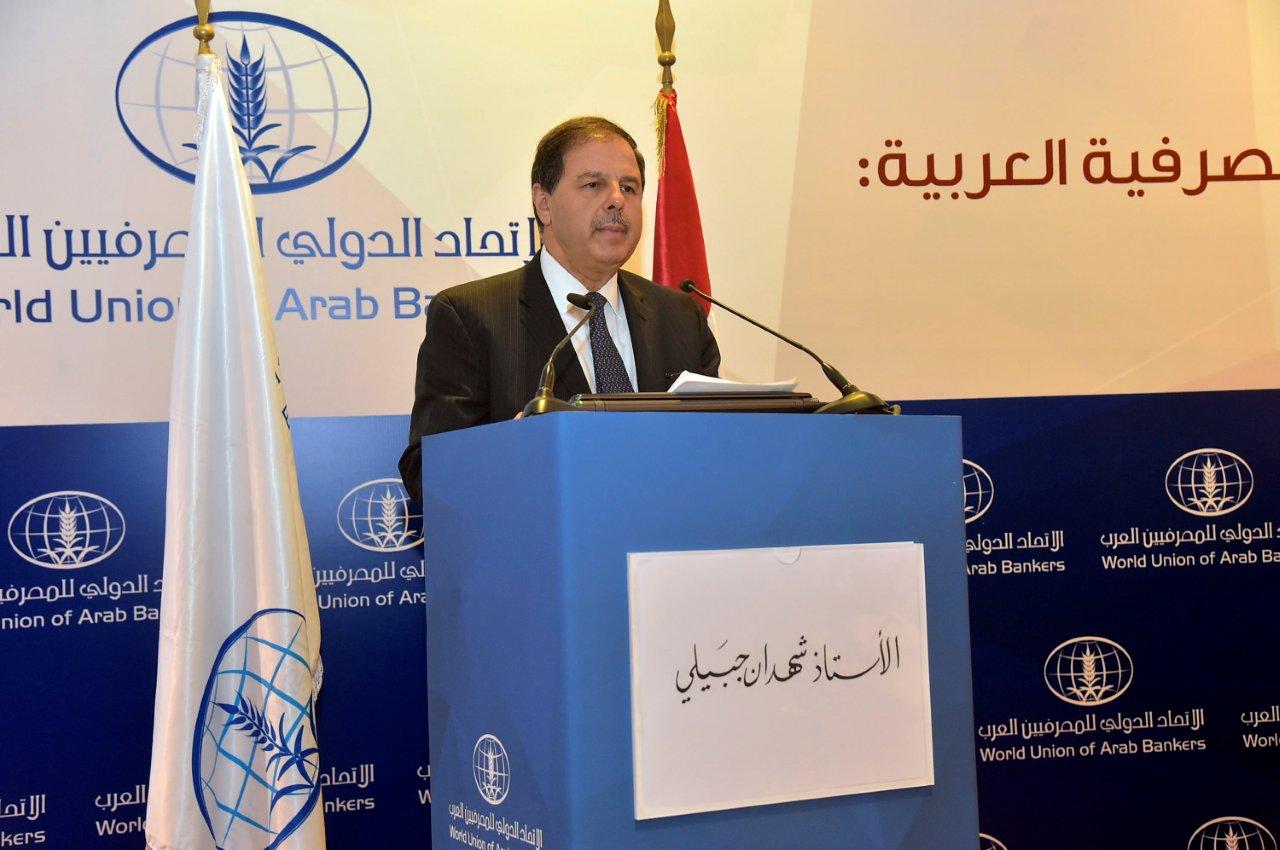
Character and Values
Those who know Jebeyli say his professional stature contrasts with his personal humility. Despite his extensive résumé, he is described as modest, approachable, and deeply principled. In meetings, he listens more than he speaks, asking clarifying questions rather than asserting dominance. Even while managing large compliance divisions, he maintained an open-door policy and mentored young officers with genuine care and respect. His rapport with Lebanese and Arab compliance officers and lawyers is often highlighted; he treated them as partners and colleagues rather than subordinates, fostering a strong team culture built on trust, collaboration, and shared responsibility for the integrity of the sector.
His integrity forms the foundation of his reputation. In a field defined by ethics, he has led by example — insisting that adherence to law is not a constraint but a safeguard. During Lebanon’s most turbulent compliance challenges, he reminded peers: “Follow the law and the rules of ethics— that’s how banks could survive internationally.” He rejects shortcuts but balances principle with pragmatism, earning trust not just for his legal accuracy but also for his sound judgment.
Colleagues often say his advice is valued because it is both precise and practical. His leadership style — combining a guardian’s rigor with a strategist’s nuance — has made him a sought-after voice among regional financial leaders.
He is also quick to credit teamwork over personal achievement, attributing success to collective effort and strong institutional culture. Approachable and soft-spoken, he possesses a diplomat’s skill for consensus building — crucial in aligning banks around shared policies. Over time, his authenticity and ethics have earned him not only professional respect but deep personal regard. In the words of many peers: “What you see with Jebeyli is exactly what you get — a gentleman of integrity.”
Legacy and Impact
Jebeyli’s legacy unfolds across several dimensions. Institutionally, every organization he has served bears his imprint. At SAMBA, under Regulatory oversight he contributed in helping Saudi banking systems integrate into global finance and in supporting young Saudi professionals. At Citibank MENA, he professionalized compliance across jurisdictions, helped creating models later emulated by peers. And at Group Audi, the compliance policies he contributed in designing continues to safeguard the bank’s relations with correspondent banks — while many of his team now lead compliance units across the region. He was keen on hiring and training young local talents, and some of them are now in leadership positions in their countries.
Systemically, his work has elevated Arab banking’s entire compliance ecosystem. Through his leadership in the ABL, UAB, and WUAB, he helped institutionalize higher standards. The compliance committee he chaired in Lebanon and at UAB, coordinated unified responses to regulatory shifts, while the Certified Compliance Professionals group he led at WUAB became a platform for collective progress from Rabat to Muscat.
The MENA FCCG, which he helped establish, continues to liaise with global watchdogs to anticipate new risks. Many of the region’s due diligence and sanctions-screening frameworks trace their origins to these initiatives. The training programs and manuals he teamed in creating remain the backbone of compliance education in numerous Arab banks.
However, perhaps his greatest legacy lies in people. Over the years, Jebeyli has mentored an entire generation of compliance officers and lawyers. Many of today’s senior professionals in Lebanon and the Arab World began their careers under his guidance. He convinced them that compliance is not a cost but an investment — “money well spent,” “understanding the respective industry and its legal rules is what makes a good lawyer” as he famously said.
His calm, credible communication helped shift the regional mindset from reactive to proactive. In banking cultures once dominated by personal networks, he championed the rule of law and long-term sustainability. His influence also extends to policymaking: he has advised regional and local lawmakers on modernizing banking laws.
When he speaks at global conferences, he draws on lived experience rather than theory. Listeners respond not to rhetoric, but to authenticity. Through these efforts, Jebeyli’s legacy lives in stronger institutions, clearer laws, and more principled professionals.
Closing Reflection
Looking back, Jebeyli might describe his achievements simply as fulfilling a duty. In a profession often driven by short-term goals, he has always played the long game — building systems of trust and competence that outlast any single transaction.
The banking world he entered decades ago bears little resemblance to today’s tightly regulated global system. Thanks in part to pioneers like him; Arab banks now operate within a far more robust framework of local laws in line with international standards, governance and ethics.
True to his nature, Jebeyli downplays personal triumphs. The values that shaped him — integrity, prudence, and respect for the law — continue to guide his advisory work. Even today, leaders across the region seek his counsel for his balanced, pragmatic insight. In an era of economic uncertainty, his steady voice remains both relevant and reassuring.
If the measure of leadership is the legacy one leaves behind, then Chahdan Jebeyli’s legacy is unmistakable. It lives on in the strengthened institutions, elevated standards, and principled professionals that now define Arab banking. His story is not merely one man’s success — it is a testament to how one individual’s integrity and vision can help shape the conscience of an entire industry.