
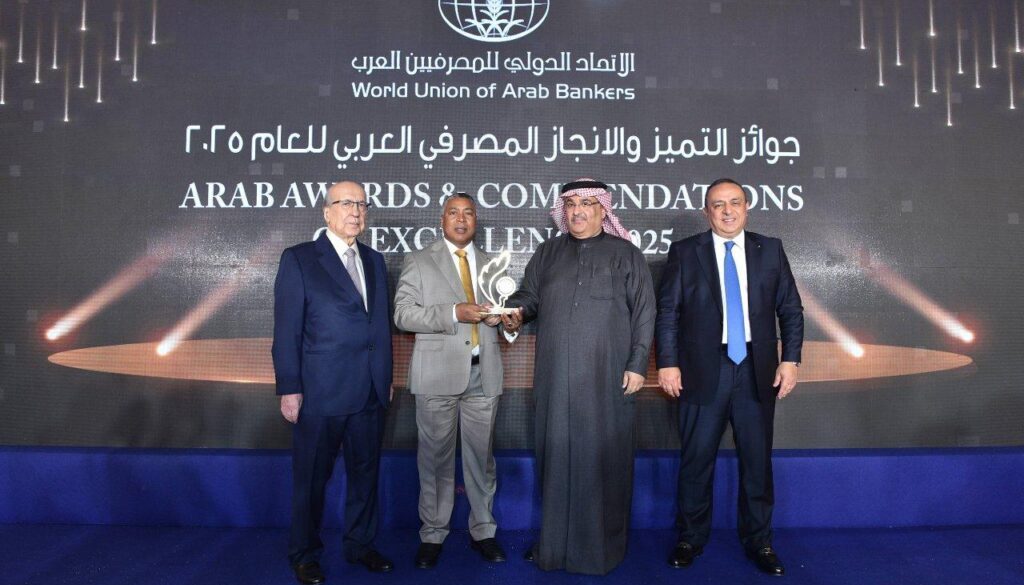
How four decades of steady leadership, cross-border experience, and institutional commitment shaped one of the UAE’s most respected banking professionals.
Beginnings in a Young Banking Landscape
In the late 1980s, long before the UAE’s banking sector rose to its modern sophistication, a visitor walking into a commercial bank branch in Dubai or Abu Dhabi would have experienced a world markedly different from today’s seamless digital environment. The space hummed with the mechanical rhythm of dot-matrix printers, the muted clatter of typewriter keys, and the low murmur of customer conversations that filled the high-ceilinged halls. Files were stacked neatly behind counters, each one representing a relationship, a promise, or a risk to be weighed carefully by the staff who managed them.
At one such branch, a young banker named Adnan Al Ismail was entering the profession that would shape the next four decades of his life. There was nothing dramatic about that moment—no symbolic gesture or sudden revelation. Instead, it was the beginning of a life defined by something more subtle: the discipline and steadiness required to help build institutions, one decision and one responsibility at a time.
His early years at HSBC Bank in the UAE, where he served as a Commercial Manager, were rooted in the kind of work that seldom makes headlines but shapes the fundamentals of the profession. He dealt with customers face-to-face, learned the practical mechanics of lending, and experienced firsthand the growing pulse of a young national economy. Those years provided him with a simple but powerful exposure: the realization that banking relies not only on numbers or credit policies, but on a continuous dialogue between institutions and the communities they serve.
Twenty Years of Operational Leadership at Commercial Bank of Dubai
As the UAE’s financial landscape expanded and new aspirations began taking shape, Al Ismail moved to the Commercial Bank of Dubai—a shift that marked the start of a twenty-year chapter that would profoundly shape his leadership style. His position there, over time evolving into Senior Manager and Head of Branches, placed him at the crossroads of operations, customer relations, and institutional development.
In the 1990s and early 2000s, managing a branch network was far more than directing day-to-day operations. It meant cultivating a culture of reliability in a rapidly changing environment, ensuring that every customer who walked into a CBD branch—whether a small business owner, a growing family, or a corporate client—encountered an institution capable of meeting the moment. Those two decades solidified one of his enduring qualities: a commitment to consistency. Not the kind of rigidity that resists change, but a steadiness that enables it.
While some careers rise through dramatic turning points, his advanced steadily through trust earned over years of accumulated experience. That trust laid the groundwork for his next major professional chapter.
Guiding Corporate Banking at ADCB
When he transitioned to Abu Dhabi Commercial Bank (ADCB) in 2010, he arrived with a rare combination of operational knowledge and managerial maturity. As Head of Corporate Banking, he was thrust into an environment where decisions influenced large institutions, major corporates, and long-term national development.
Corporate banking demands not only competence but judgment. It requires assessing risks with caution, understanding the ambitions of clients, and balancing growth with sustainability. Over ten years, he led ADCB’s corporate division with precisely that balance, strengthening relationships, managing portfolios, and supporting the bank’s strategic direction through evolving market conditions.
Later, as he moved into the role of Senior Banker in ADCB’s Corporate Banking Group, his focus became even more refined. He now channels his decades of experience into strategic accounts and institutional priorities—a role that mirrors the maturity of a career built through steady progression, not sudden leaps.
Expanding Horizons: Egypt, Governance, and National Banking Bodies
His professional reach expanded beyond the UAE when he became a Non-Executive Board Member of ADCB Egypt in 2019. This cross-border responsibility added new layers to his experience, requiring an understanding of Egypt’s regulatory environment, its banking needs, and the intricate task of aligning institutional priorities across two different financial landscapes.
That same year marked another important chapter: his appointment to the Board of the UAE Banks Federation (UBF). As the collective voice of the UAE’s banking industry, the Federation plays a vital role in advancing regulatory dialogue, harmonizing standards, and guiding the sector’s long-term development. Within UBF, his appointment to the Audit Committee highlighted the confidence placed in his judgment. The committee’s work is deliberate and technical, centered on oversight, transparency, and the safeguarding of institutional integrity.
Through these responsibilities, his influence increasingly shifted from managing individual operations to shaping broader sectoral frameworks—a natural evolution for a banker whose strengths lay in steadiness and institutional commitment.
A Regional Role: His Steady Presence in the World Union of Arab Bankers
The most significant extension of his regional engagement emerged through his appointment to the Board of the World Union of Arab Bankers (WUAB) in 2021. This position placed him at the center of the Arab region’s largest financial cooperation platform.
At WUAB and UAB, he is part of a collaborative ecosystem where banks from across the Arab world come together to exchange perspectives, align best practices, and reinforce sectoral cohesion. His presence in these forums is not vocal in the performative sense, but deeply engaged. He participates in deliberations, contributes insights shaped by decades of institutional work, and supports the Union’s mission of fostering stronger relationships among Arab banking systems.
His role here represents the broader arc of his career: a commitment to institutions, a belief in long-term sectoral development, and an understanding that the strength of Arab banking lies in the bridges built between national systems.
A Legacy of Continuity, Stability, and Institutional Stewardship
Across these four decades, Al Ismail has maintained a professional identity grounded not in public visibility but in responsibility. He has never sought personal prominence through publications or media presence. Instead, his recognition has come through the trust placed in him by major institutions across the UAE and the Arab region.
When viewed in full, his career reflects a coherent progression: early operational discipline informed his corporate leadership; corporate leadership deepened his governance expertise; governance work positioned him to contribute regionally through UBF and WUAB. Each stage strengthened the next, creating a professional journey marked by consistency and purpose.
Today, as he continues his work at ADCB and remains an active member of the UBF and WUAB, he stands as part of a generation of banking leaders whose contributions have shaped the region’s financial landscape quietly but meaningfully. His career serves as a reminder that the banking sector’s strength depends not only on innovation and strategy, but on the steady stewardship of professionals who dedicate their lives to building and maintaining the institutions that hold the system together.
His story began in a modest bank branch in the 1980s. It continues today at the highest levels of regional financial cooperation—proof that some of the most enduring contributions to the banking world are those made quietly, steadily, and with unwavering commitment to the institutions that define it.


