- Dollar dominance faces structural uncertainty.
- Multicurrency system: risk or resilience?
- Arab banks must prepare strategically.
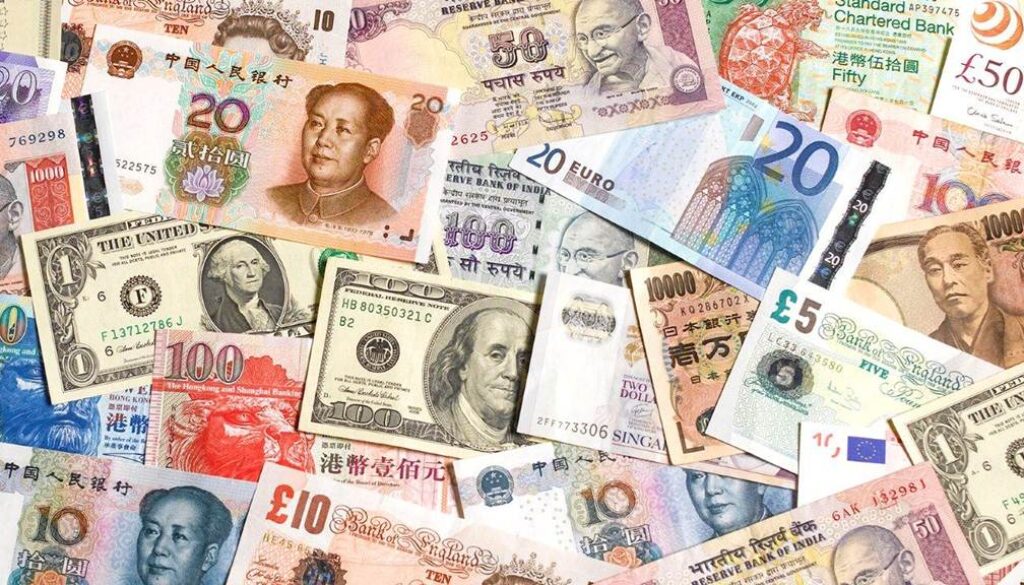
For more than half a century, global financial stability has rested on a quiet assumption: that the United States would not only supply the world with liquidity through the dollar, but would also safeguard the institutional architecture underpinning the international economic order. The dollar’s position as the principal reserve currency has provided predictability to trade, capital flows, and sovereign finance. Yet the growing unpredictability of American policymaking has prompted a fundamental question for central bankers and policymakers worldwide: is it prudent for the global system to hinge so heavily on a single national currency?
This question is no longer theoretical. The asymmetry embedded in the dollar-based system has long been understood. To provide the world with dollar liquidity, the United States must run persistent current-account deficits—importing more than it exports—while issuing debt instruments that foreign governments and institutional investors are willing to hold as reserves. The system works because US Treasury securities are considered safe, liquid, and backed by a deep financial market infrastructure. In return, the United States benefits from consistently low borrowing costs and considerable fiscal latitude.
It was this dynamic that led France’s former finance minister Valéry Giscard d’Estaing to describe the dollar’s status as an “exorbitant privilege.” The phrase captured an enduring structural reality: the issuer of the reserve currency enjoys advantages not available to other sovereign states. These advantages have allowed the United States to finance deficits at scale, drawing on global savings without facing the constraints typically imposed on other economies.
Yet such privilege carries implicit responsibilities. As former People’s Bank of China Governor Zhou Xiaochuan observed in the aftermath of the 2008 global financial crisis, global monetary stability ultimately depends on a currency issued by a sovereign whose domestic priorities may not always align with global interests. When national policy objectives diverge from systemic stability, the spillovers are felt far beyond the issuing country’s borders.
In recent years, concerns about policy unpredictability in Washington have intensified. Public tensions between the US executive branch and the Federal Reserve, coupled with assertive foreign policy postures, have introduced a degree of uncertainty into the international financial environment. For many observers, these developments underscore a vulnerability inherent in the current arrangement: the world’s monetary anchor is inseparable from the domestic political cycle of a single country.
This context revives debates that first gained prominence after the 2008 crisis. In 2009, Zhou proposed exploring the development of a global reserve asset decoupled from the domestic policy considerations of any one sovereign issuer. While such proposals did not fundamentally alter the architecture of the system, they signaled a growing recognition that excessive dependence on a single currency carries systemic risk.
At the same time, China began promoting the internationalization of the renminbi. For decades, the world’s largest exporter relied almost exclusively on the dollar to invoice and settle trade. This dependence led to a significant accumulation of dollar reserves, peaking at approximately $3.8 trillion in 2014. Such a position, while reflective of China’s export success, also meant that a substantial portion of its national savings was tied to US assets and policy decisions.
In the years that followed, China gradually reduced its holdings of US Treasury securities—from roughly $1.3 trillion in 2015 to around $700 billion today. This adjustment was not merely a portfolio reallocation; it reflected a broader strategy to diversify reserve assets and mitigate exposure to external policy shifts. For a large, export-driven economy, outsourcing payments systems and savings to another sovereign entails risks that prudent policymakers cannot ignore.
The issue of global imbalances—long discussed in international forums—has resurfaced with renewed urgency. Under France’s recent leadership of the G7, these concerns have returned to the agenda. In the early 2010s, similar discussions within the G20 centered on distributing adjustment burdens more equitably across major economies. Chinese policymakers argued that a more balanced monetary system would not only reduce reliance on the dollar but also enhance systemic stability by offering greater choice in payments and reserve holdings.
At that time, there was cautious optimism about gradual progress toward a multicurrency system. The International Monetary Fund played a constructive role, encouraging the integration of emerging-market currencies into the global framework. The inclusion of the renminbi in the IMF’s Special Drawing Rights (SDR) basket in 2016 was widely interpreted as a milestone. During China’s G20 presidency that same year, the idea of a more diversified reserve structure gained traction as a stabilizing evolution rather than a disruptive shift.
However, the geopolitical environment has since become more complex. Strategic competition among major powers has intensified, and trust among key stakeholders has eroded. Recent analytical reports, including those from leading economic research institutions in Geneva, caution that a multicurrency system in a fragmented geopolitical climate could introduce new vulnerabilities. Without effective coordination mechanisms, currency competition may amplify volatility rather than reduce it.
This tension lies at the heart of the current debate. On one hand, heavy dependence on the dollar exposes the global economy to concentrated risk. On the other, an unmanaged transition toward multiple competing reserve currencies could generate instability. The challenge is not merely structural but institutional: a multicurrency framework requires robust policy coordination, credible dispute-resolution mechanisms, and a shared commitment to systemic stability.
For the Arab world, these dynamics carry particular significance. Many Arab economies maintain currency pegs to the dollar, rely heavily on dollar-denominated trade, or hold substantial dollar reserves. Sovereign wealth funds across the Gulf are deeply integrated into US financial markets. Meanwhile, regional central banks depend on the predictability of global dollar liquidity conditions to manage exchange rates, inflation, and capital flows.
At the same time, economic ties with China and other emerging markets are expanding rapidly. China is now a major trading partner for many Arab states, particularly energy exporters. Discussions around settling portions of trade in alternative currencies have gained visibility. While such shifts remain modest relative to overall dollar volumes, they reflect a broader strategic recalibration.
It would be premature to conclude that the dollar’s dominance is nearing an abrupt end. The US financial system retains unparalleled depth, liquidity, and institutional credibility. No alternative currency currently offers the same combination of market size, legal predictability, and global acceptance. Even the euro, despite its scale, faces structural constraints rooted in fiscal fragmentation within the European Union. The renminbi, while increasingly used in trade settlement, remains subject to capital controls and policy considerations that limit full reserve status.
Nevertheless, the concentration of influence within a single currency system presents a vulnerability. When global stability depends on one sovereign setting and upholding the rules, confidence in that sovereign’s policy continuity becomes a critical variable. Should that confidence weaken, uncertainty reverberates across markets.
In this context, a carefully managed diversification of reserve assets—rather than abrupt displacement—appears the most realistic path forward. The IMF’s SDR mechanism, though limited in scale, offers a template for cooperative monetary evolution. Regional financial arrangements, swap lines, and cross-border payment systems can also contribute to resilience if designed within a framework of transparency and coordination.
For Arab policymakers, the question is not whether to abandon the dollar, but how to position regional financial systems in a world where currency configurations may gradually broaden. This requires strategic foresight rather than reactive measures. Central banks must continuously assess reserve composition, liquidity buffers, and exposure to external shocks. Sovereign wealth funds should evaluate currency risk management within diversified portfolios. Commercial banks need to strengthen capabilities in multicurrency trade finance and payment infrastructure.
Moreover, regional cooperation can play a meaningful role. The Arab Monetary Fund and other regional institutions could facilitate dialogue on reserve diversification strategies, payment system interoperability, and contingency planning. Strengthening regulatory frameworks and deepening local capital markets would reduce vulnerability to external volatility regardless of the global currency mix.
The future of the international monetary system will likely be shaped not by dramatic rupture but by incremental adjustments. A system that accommodates several major currencies, anchored by credible multilateral institutions, could distribute risk more evenly. Yet such a system will function effectively only if major powers demonstrate sustained commitment to cooperation rather than unilateral advantage.
For now, credible alternatives to the dollar remain limited. Absent meaningful policy shifts in the United States or the emergence of a robust multilateral framework capable of operating independently of US leadership, uncertainty will persist. The prudent course for regional stakeholders is therefore to prepare for gradual diversification while maintaining constructive engagement with existing institutions.
Recommendations for Arab Banking Leaders
In light of these developments, Arab banks and financial authorities should adopt a forward-looking strategy grounded in resilience and measured diversification. First, central banks should conduct periodic stress assessments of reserve portfolios under various currency realignment scenarios. Second, commercial banks should expand expertise in non-dollar settlement mechanisms to serve clients engaged in Asia–Middle East trade corridors. Third, policymakers should support regional payment infrastructure capable of interfacing seamlessly with multiple currency systems. Finally, sustained engagement in multilateral forums—whether through the IMF, G20 outreach mechanisms, or regional financial bodies—remains essential to ensure that Arab perspectives contribute to shaping the evolving monetary order.
The question is not whether there is life after the dollar, but how to ensure stability and prosperity regardless of how the global currency landscape evolves. For the Arab banking sector, preparedness, prudence, and institutional cooperation will be the defining imperatives in the years ahead.