
BY DR SOHA MAAD
Introduction
The governance of the Red Sea is multifaceted, involving both strategic and geopolitical dimensions. A Red Sea governance framework involves infrastructure and technology governance, financial and risk management, and regulation. The latter involves various strategies and policies for enhanced global trade and supply chain management.
This article highlights the importance of the Red Sea governance in light of the latest geopolitical development. The article overviews the Red Sea infrastructure and activity including the main facts and figures, the shipping routes passing through the Red Sea and the main goods and services traded through the Red Sea. The importance of the Red Sea in global trade is highlighted with a focus on the latest developments and the geopolitical risks and the impact of the Red Sea disruption on global trade. The article concludes by drawing the future of the Red Sea trade, technologies, and infrastructure towards greater governance and Arab banks contribution to Red Sea governance.
Red Sea Trade Infrastructure and Activity
The Red Sea is a vital artery for global trade. Recent developments have reshaped the Red Sea infrastructure and activity in dramatic ways.
Key Ports and Facilities of the red sea include:
• Port Sudan: Undergoing expansion and modernization, especially with Chinese investment via the Belt and Road Initiative (BRI).
• Berenice Naval Base (Egypt): Significantly expanded to support both military and commercial maritime operations.
• Djibouti Port: A major logistics hub, especially for East African trade and Chinese naval presence.
• Jeddah Islamic Port (Saudi Arabia): One of the busiest Red Sea ports, central to Saudi Vision 2030’s logistics ambitions involve developing new corridors:
• China’s Belt & Road Initiative (BRI): Infrastructure investments across Sudan, Egypt, and Djibouti and strengthening maritime logistics and port connectivity.
• India-Middle East-Europe Economic Corridor (IMEC): Proposed alternative to BRI.
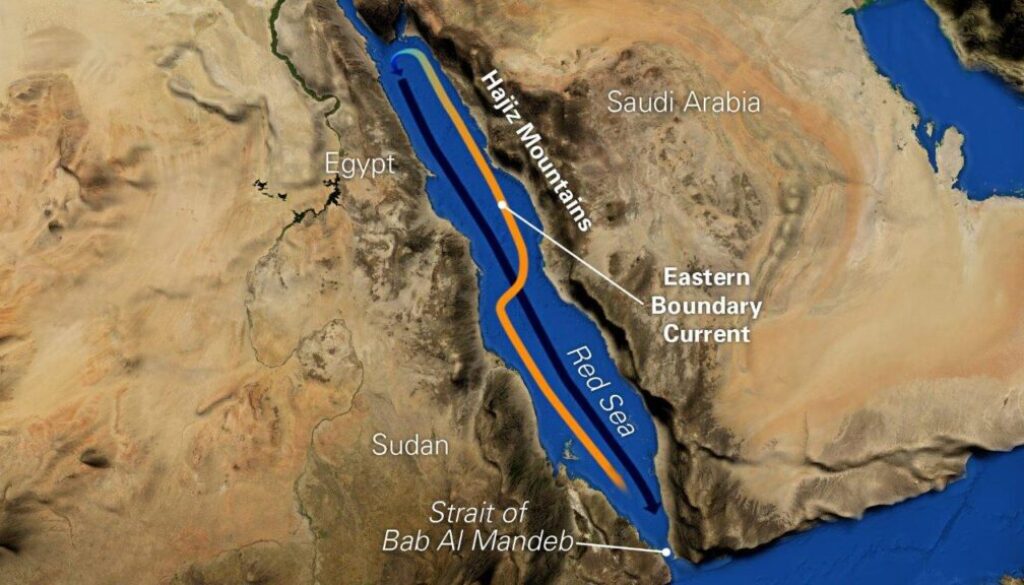
Red Sea Geography and Physical Characteristics | |
• Location: Between Africa and the Arabian Peninsula. • Length: ~2,250 km (1,400 miles) • Width: Up to 355 km (221 miles) • Surface Area: ~438,000 km² • Average Depth: 490 meters (1,610 feet) • Maximum Depth: 3,040 meters • Salinity: ~40%, the highest in the world
|
|
Main Shipping Routes through the Red Sea
The Red Sea is a critical artery in global maritime trade, forming part of the shortest sea route between Asia and Europe. The main shipping routes that pass through this region:
Primary Red Sea Shipping Routes
• Asia–Europe Route: Starts in East Asia, enters the Indian Ocean, passes through the Bab el-Mandeb Strait, travels up the Red Sea, and exits via the Suez Canal into the Mediterranean. This is the most heavily trafficked route for container ships carrying manufactured goods, electronics, textiles, and raw materials between Asia and Europe. It accounts for nearly 30% of global container traffic.
• Asia–Middle East–Africa Route: Similar to the Asia–Europe route but diverts to ports in the Middle East and East Africa. It facilitates regional trade in oil, foodstuffs, and industrial goods.
• Europe–East Africa Route: Ships depart from European ports, enter the Mediterranean, pass through the Suez Canal, and head south through the Red Sea to East African ports. It supports trade in agricultural products, textiles, and humanitarian aid.
Strategic Chokepoints
• Bab el-Mandeb: Southern entrance of Red Sea. It connects Red Sea to Gulf of Aden & Indian Ocean
• Suez Canal: Northern exit of Red Sea Connects Red Sea to Mediterranean Sea
These chokepoints are vital for uninterrupted global trade. Red Sea routes drastically reduce shipping time compared to alternatives. Countries like Egypt, Saudi Arabia, and Djibouti rely heavily on port revenues and trade facilitation. These routes are essential for transporting energy, electronics, food, and consumer goods.
Main Goods and Services Traded Through the Red Sea
The Red Sea is a vital conduit for global trade, facilitating the movement of a wide range of goods and services between Europe, Asia, and Africa. Main commodities and services traded through this strategic waterway include:
Energy Products
• Crude Oil & Refined Petroleum: Transported from the Persian Gulf to Europe.
• Liquefied Natural Gas (LNG): Shipped from Gulf states to Asia and Europe.
Manufactured Goods
• Electronics: Smartphones, computers, and components from East Asia.
• Automobiles and Machinery: Exported from Europe and Asia to Africa and the Middle East.
• Textiles and Apparel: Especially from South Asia and China to European markets.
Agricultural Commodities
• Grains: Wheat and corn from Europe and the Black Sea region to Africa and the Middle East.
• Sugar, Coffee, and Tea: From East Africa and South Asia to global markets.
Raw Materials
• Metals and Minerals: Including copper, gold, and iron ore from Africa.
• Chemicals and Fertilizers: Used in agriculture and industry across the region.
Consumer Goods
Furniture, Toys, and Household Items: Shipped from Asia to Europe and Africa.
Services Facilitated by Red Sea Trade
• Shipping and Logistics: Container handling, refueling, and transshipment services at major ports like Jeddah, Djibouti, and Port Sudan.
• Maritime Insurance and Security: Especially critical due to piracy and geopolitical tensions.
• Port Services: Customs clearance, warehousing, and cargo inspection.
The Red Sea has long been a hub for trade in spices, incense, gold, and exotic goods, dating back to ancient Egyptian and Islamic Golden Age expeditions. Its strategic location has made it a focal point for cultural and economic exchange for millennia.
Red Sea Importance for Global Trade
The Red Sea is one of the most strategically vital waterways in the world, playing a central role in global trade and geopolitics. Over 10–12% of global trade passes through the Red Sea annually. The Red Sea forms a strategic trade route and is part of the shortest maritime route between Europe and Asia. It connects the Mediterranean, Indian Ocean, and Pacific trade networks. Its importance has grown with the rise of global supply chains, especially for energy and consumer goods.
Latest Trade Development in Red Sea
The latest trade developments in the Red Sea as of mid-2025, reflecting both strategic innovation and ongoing challenges are:
Neom Port Pilot
Saudi Arabia’s Port of NEOM completed a pilot program that cut Cairo – Iraq trade transit times by over 50%. A new intermodal corridor links Egypt’s Port of Safaga to NEOM via the Red Sea, then overland to Erbil, Iraq. This initiative supports Saudi Vision 2030 by positioning NEOM as a regional logistics hub and offering alternatives to traditional shipping routes.
Submarine Cable Disruption
Rising tensions and attacks in the Red Sea are threatening undersea cable systems critical to global internet connectivity. Telecom companies like Ooredoo and Zain are exploring terrestrial cable routes to bypass the Red Sea and avoid outages. India’s internet economy is particularly vulnerable, with increased insurance costs and repair delays for damaged cables.
Ships avoiding the Red Sea are rerouting around Africa’s Cape of Good Hope, increasing calls at African ports. Many African ports lack capacity to handle the surge, leading to congestion and delays.
Geopolitical Risk Surrounding Red Sea
The Red Sea has become a geopolitical hotspot in 2025, with escalating tensions and strategic rivalries reshaping the region. Attacks on the Red Sea have disrupted global trade, forced rerouting around Africa, and raised insurance premiums. The Bab el-Mandeb Strait and Suez Canal are becoming now high-risk zones. United States (U.S.), China, Iran, Saudi Arabia, United Arab Emirates (UAE), Turkey, Russia, and others have expanded military presence.
Risks of Red Sea Disruption
Over 190 attacks since late 2023 have forced major carriers to reroute, adding 10–14 days to Asia–Europe shipping times. Even with diplomatic progress, the threat of asymmetric warfare and maritime attacks remain high. The Red Sea hosts critical subsea cables like Google’s Blue-Raman and Bharti Airtel’s Africa, vital for internet connectivity across Asia, Africa, and Europe. Cable cuts and anchor damage near Bab el-Mandeb have slowed data speeds and increased repair costs.
Companies are investing in terrestrial routes and hybrid networks like the India–Middle
Strategic competition among the U.S., China, Iran, and Gulf states is intensifying, with naval coalitions and base expansions in Djibouti, Sudan, and Somaliland.
Increased militarization raises the risk of miscalculation and conflict spillover. The Red Sea may remain a contested zone, with fragile ceasefires and proxy tensions shaping maritime security. Continued disruptions could further inflate freight costs, delay goods, and destabilize supply chains. Businesses may accelerate nearshoring, diversify routes, and invest in digital logistics to mitigate risk.
The Impact of Red Sea Disruption on Global Trade
Disruptions in the Red Sea have had major ripple effects on global trade, especially since late 2023, including:
Trade Route Disruption
Ship transits through the Suez Canal have dropped by up to 50% compared to previous years. Many shipping companies are rerouting vessels around Africa, adding 10–15 days to delivery times and increasing fuel and labor costs. Over 586 container vessels were rerouted in early 2024 alone.
Economic and Inflationary Effects
Container shipping prices more than doubled in 2024, peaking near record highs. A 10% rise in shipping costs can increase core inflation by 0.18 percentage points in G20 countries. Just-in-time industries (electronics, food, energy) are especially vulnerable to delays and cost spikes.
Insurance & Security Challenges
The Southern Red Sea and Gulf of Aden are now considered high-risk by insurers. Insurance costs have surged, with stricter security protocols and dynamic pricing.
Strategic and Geopolitical Consequences
Disruptions near the Strait of Hormuz and Red Sea raise concerns about oil supply and pricing. Governments and companies are investing in alternative routes, land bridges, air freight, and rail, to bypass maritime chokepoints. Persistent instability is reshaping global trade strategies and eroding confidence in maritime security.
The Red Sea disruption has hit several industries hard, especially those dependent on just-in-time delivery and global supply chains including:
• Automotive Industry: Major automakers like Volvo, Tesla, and Suzuki suspended production in Europe due to component shortages.
• Retail and Consumer Goods: Companies like Amazon, IKEA, Walmart, and Home Depot have faced delays in seasonal items, clothing, patio furniture, pool supplies. Longer lead times and higher shipping costs are affecting inventory planning and pricing.
• Construction and Manufacturing: Shortages in raw materials and equipment have slowed down projects and increased costs. Rerouted shipments and port congestion are causing delays in delivery of steel, machinery, and modular components.
• Energy Sector: Oil prices spiked by 4% after attacks and retaliatory strikes in early 2024.
• The Red Sea is a key route for Gulf oil exports. Disruptions raise fears of supply bottlenecks.
• Food and Agriculture: Perishable goods like fruits, vegetables, and seafood are at risk due to extended transit times.
• Logistics and Shipping: Container rates have quadrupled, and delivery times increased by up to 15 days.
• Insurance Industry: Marine war risk premiums have surged, and coverage models are being recalibrated. The Southern Red Sea and Gulf of Aden are now designated high-risk zones.
Future of Red Sea Trade Technologies and Infrastructure
The future of Red Sea trade is being shaped by a mix of geopolitical tensions, strategic innovation, and regional cooperation. Attacks have caused a dramatic drop in Red Sea shipping transit volume. Many shipping companies will continue rerouting via the Cape of Good Hope, adding 10–14 days to Asia–Europe transit times. Higher freight costs and insurance premiums will remain a challenge through 2025. Saudi Arabia’s NEOM is emerging as a logistics hub, offering faster intermodal routes to Iraq and the Levant.
Countries like Djibouti, Kenya, and Tanzania are investing in port infrastructure to absorb rerouted traffic. Projects like the Red Sea Development Company are integrating ESG (Environmental, Social, & Governance) standards into port and tourism infrastructure. UNCTAD is pushing for digital customs and logistics systems to reduce delays and improve resilience. The United States, United Kingdoms, and allies have formed maritime coalitions to protect shipping lanes, but tensions remain high. Expanding influence through port investments and military presence in Sudan and Djibouti. The Red Sea Council may evolve into a more active platform for conflict resolution and trade coordination. Longer delivery times and higher costs are feeding into global inflation, especially in Europe and Africa. Companies are investing in nearshoring and alternative transport modes to reduce dependency on Red Sea routes.
To enhance the future trade infrastructure and technologies of the Red Sea, we hereby propose a blend of strategic investment, innovation, and regional cooperation, including:
• Modernizing Port Infrastructure by expanding and rehabilitating key ports to handle larger container volumes and improve efficiency.
• Ports should adopt smart technologies (Artificial Intelligence AI and Internet of Things IoT Integration) for cargo tracking, predictive maintenance, and automated customs clearance.
• Secure digital ledgers and blockchain can be piloted to streamline documentation and reduce fraud in cross-border transactions.
• Embedding ESG standards into infrastructure planning. Solar and wind power can be used to reduce carbon footprints of port operations.
• Regional Collaboration and Security Coordination should be enhanced to secure Red Sea shipping lanes from piracy and militant attacks. A platform for Arab and African coastal states is needed to coordinate trade, security, and environmental governance.
Towards Better Governance of the Red Sea and Arab Banks Role
The Red Sea is not owned by any single country, it is a shared maritime space bordered by several nations, each with jurisdiction over their respective territorial waters and Exclusive Economic Zones (EEZs).
While no one “owns” the Red Sea, several powers exert influence:
• Saudi Arabia: Through the Red Sea Development Company and Vision 2030, it’s investing heavily in tourism and infrastructure along its western coast2.
• Egypt: Controls the northern gateway via the Suez Canal, a vital global trade artery.
• Djibouti: Hosts multiple foreign military bases (U.S., China, France, Japan), making it a strategic hub.
• UAE: Funds port developments in Berbera and Bosaso, embedding military infrastructure to secure energy routes3.
• China & U.S.: Compete for influence through naval presence and infrastructure investments.
Arab banks can play a transformative role in Red Sea governance, as the region grapples with geopolitical tensions, maritime insecurity, and economic instability:
Financing Regional Infrastructure and Connectivity
• Ports & Logistics: Banks can fund upgrades to Red Sea ports and intermodal transport systems, improving trade efficiency and resilience.
• Digital Infrastructure: Investment in fintech and digital banking across littoral states can enhance financial inclusion and cross-border commerce.
• Green Projects: Support for sustainable energy and climate-resilient infrastructure can align with global ESG goals.
Supporting Multilateral Institutions
• Arab banks can provide financial and technical support to the Council of Arab and African Coastal States of the Red Sea and Gulf of Aden, helping it evolve beyond a security-focused body into a multidimensional platform.
• Through development finance and economic diplomacy, banks can help reduce tensions by promoting shared prosperity.
Cross-Border Investment and Development
• SME Financing: Facilitating access to capital for small and medium enterprises in coastal states can stimulate local economies and reduce dependency on foreign aid.
• Public-Private Partnerships (PPPs): Banks can co-invest with governments in strategic sectors like tourism, fisheries, and renewable energy.
Enhancing Maritime Security through Economic Stability
• Arab banks can collaborate with insurers to develop tailored marine risk products for Red Sea shipping routes.
• Strengthening compliance and monitoring systems.
Data and Intelligence Sharing
• Banks can provide macroeconomic insights to help governments and regional bodies anticipate shocks and plan coordinated responses.
• Promoting financial transparency can help reduce corruption and improve governance across Red Sea states.


