BY DR SOHA MAAD
Brics 2025 at a Glance
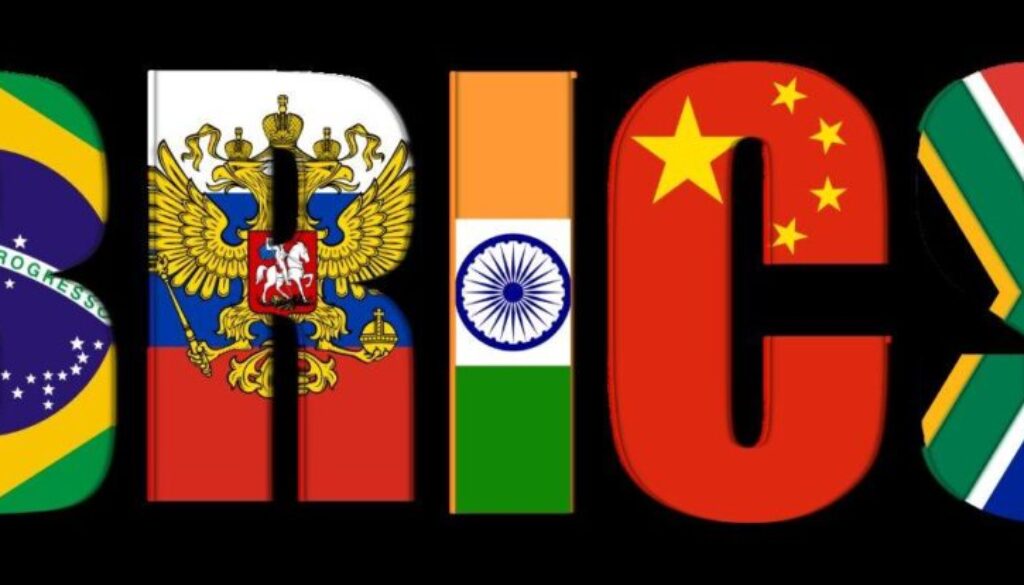
The 2025 BRICS (Brazil, Russia, India, China, and South Africa) Summit in Rio de Janeiro marked a transformative moment for the bloc, showcasing its expanded membership and ambitious agenda for reshaping global governance. The addition of new members to BRICS in 2025 (Egypt, Ethiopia, Iran, United Arab Emirates (UAE), Saudi Arabia, and Indonesia) marks a strategic pivot toward a multipolar world order and amplifies the bloc’s voice as a champion of the Global South. This article highlights the wider and the long-term impact of BRICS expansion with particular focus on impact on trade, technology, energy, world balance of power, the dollar dominance, and the new emerging world geopolitics. The article concludes with a roadmap for Arab banks to navigate the risk and challenges of BRICS 2025 expansion and to leverage the opportunities.
Significance of The New Brics Members
Each new BRICS member brings unique strengths:
- Indonesia: Southeast Asia’s largest economy and democracy and including Pacific trade routes.
- Iran & Saudi Arabia: Major energy producers; their inclusion signals BRICS’ growing influence in the Middle East.
- Egypt & Ethiopia: Key African players. Egypt bolster BRICS’ continental reach and development agenda.
- UAE: Financial and tech hub. UAE adds innovation and investment clout.
BRICS has now a strategic impact. It represents 45% of the world’s population and 35% of global Gross Domestic Product (GDP). With Iran, Saudi Arabia, and UAE, BRICS controls a significant share of global oil and gas production. Its expansion counters Western, led institutions and offers alternatives to dollar, based systems. Its expansion also strengthens cooperation among developing nations on climate, health, and tech governance
New members support calls to reform the UN Security Council and World Trade Organization (WTO). BRICS expansion fuels efforts to settle trade in local currencies and reduce reliance on the United States (US) dollar. The bloc now reflects a broader spectrum of cultures, religions, and political systems, enhancing legitimacy.
Impact on Global Trade
The expansion of BRICS is already shaking up global trade dynamics. BRICS+ now accounts for nearly half the world’s population and around 40% of global GDP. Intra, BRICS trade has surged, with 40% of global goods trade now occurring among member states. New members like Saudi Arabia, Iran, and UAE bring energy dominance, while Indonesia and Egypt add manufacturing and logistics strength
BRICS is pushing to settle trade in local currencies, reducing reliance on the US dollar. China’s Cross, Border Interbank Payment System (CIPS) and Russia’s rubble, based trade are key tools in this shift. A BRICS currency is under discussion, which could further challenge dollar hegemony.
New Development Bank (NDB) is expanding its lending footprint, offering alternatives to Western institutions like the International Monetary Fund (IMF) and World Bank. This boosts trade by funding infrastructure, logistics, and digital connectivity across member states.
The United States (US), under President Trump, has threatened additional tariffs on BRICS nations, accusing them of “anti-American policies”. These tariffs could disrupt trade flows, especially for countries like South Africa and Nigeria, which rely heavily on exports to the US.
BRICS+ is building a parallel trade ecosystem, with new supply chains, payment systems, and trade agreements. This could fragment global trade but it empowers emerging economies to trade on more equitable terms.
As such, BRICS expansion is redrawing the map, not just of who trades with whom, but how trade is conducted.
Most Impacted Sectors
The BRICS+ expansion is reshaping global economic dynamics, and several sectors are impacted as follows:
Energy Sector
- Oil & Gas: With Saudi Arabia, Iran, and UAE onboard, BRICS+ now controls over 40% of global crude oil production.
- Natural Gas: The bloc produces 32% of global output, with potential to rise if Algeria joins.
- Renewables: BRICS+ is projected to generate 80% of its power from renewables by 2050, surpassing the Group of seven G7’s capacity.
- Critical Minerals: The bloc holds 75% of global manganese, 50% of graphite, and 28% of nickel, essential for batteries and clean tech.
Technology & Artificial intelligence (AI)
- Digital Sovereignty: BRICS nations are building independent fibre-optic networks, satellite systems, and cloud infrastructure.
- AI Collaboration: Joint working groups are developing facial recognition, cross-border data sharing, and AI governance frameworks.
- Semiconductors & Quantum Computing: India, Russia, and China are investing in chip manufacturing and quantum encryption.
Agriculture & Food Security
- Agri-Trade: BRICS+ accounts for 5% of global agricultural trade, with Brazil, Russia, and India leading in grains and livestock.
- Food Reserves: Plans for a BRICS Grain Exchange and Food Security Reserve aim to stabilize prices and supply.
- Innovation & Sustainability: Emphasis on digital agriculture, land restoration, and climate, resilient farming.
Infrastructure & Development Finance
- New Development Bank (NDB): Expanded lending for transport, energy, and digital infrastructure, especially in Global South nations.
- Agri, Infrastructure: Focus on storage, logistics, and irrigation to boost food production and trade.
Finance & Trade
- De-dollarization: Push for local currency settlements and a potential BRICS currency to reduce reliance on the US dollar.
- Digital Trade: Initiatives like digital certification and AI, powered customs systems aim to streamline cross-border commerce.
Brics 2025 Expansion Impact on Tech Industry
The BRICS+ expansion has a major impact on the technology (tech) industry, especially in areas where digital sovereignty, AI innovation, and infrastructure independence are top priorities.
China’s digital currency is influencing BRICS+ members to explore central bank digital currencies (CBDCs).
A decentralized system is being discussed to facilitate trade outside the SWIFT network.
BRICS is promoting shared development of AI tools and software to reduce reliance on proprietary Western tech.
Countries like Brazil and South Africa are nurturing tech start-ups in fintech, health tech, and agri-tech.
BRICS 2025 is making a strategic realignment of the digital world. BRICS+ is building a parallel tech ecosystem that could redefine who leads in innovation, security, and connectivity.
Impact of Brics 2025 on World Balance of Power
The BRICS bloc, now expanded to include Egypt, Ethiopia, Iran, Indonesia, and the UAE, has become a major force in global affairs. Its impact on the world balance of power in 2025 is both strategic and symbolic, signalling a shift away from Western dominance toward a more multipolar order.
BRICS nations are increasingly resisting US-led geopolitical and economic mandates, forming a defensive coalition that promotes sovereignty and non-intervention.
The bloc condemned US strikes on Iran, marking a rare moment of diplomatic unity and asserting its role as a voice for the Global South. With 10 full members and over 20 partner or aspiring countries, BRICS is becoming a magnet for nations seeking alternatives to Western alliances. BRICS is actively working to reduce reliance on the US dollar, with initiatives like BRICS Pay and increased gold reserves among member states. The bloc now accounts for over 35% of global GDP and controls significant shares of oil and rare earth markets. In response to BRICS’ growing influence, the US has imposed heavy tariffs, especially under President Trump, signalling economic pushback against the bloc’s ambitions.
Political systems range from democracies to autocracies, and economic disparities between members (e.g., China vs. Ethiopia) complicate consensus, building.
While China and Russia push for a stronger anti-Western stance, India and Brazil prefer a more balanced approach focused on economic cooperation.
BRICS advocates reform of global institutions like the United Nation (UN) and World Trade Organization (WTO), aiming to give developing nations more influence.
Through the New Development Bank and other tools, BRICS offers financing without Western, style conditionality.
In essence, BRICS 2025 reflects the aspirations of a diverse set of nations to redefine global governance, challenge entrenched power structures, and form a space for new voices in international decision-making.
Impact of Brics 2025 on US Dollar Dominance
The BRICS bloc’s push to challenge the US dollar’s supremacy has intensified in 2025, but the outcome is far from straightforward:
- BRICS Pay & Alternative Systems: The bloc has launched initiatives like BRICS Pay and the BRICS Bridge to facilitate trade in local currencies and bypass SWIFT.
- Gold, Backed Currency Proposal: A new BRICS currency backed by commodities like gold and oil is under discussion, aiming to offer stability beyond fiat systems.
- Expansion Strategy: With new members like Egypt, Iran, and the UAE, BRICS now represents over 45% of the world’s population and a growing share of global GDP.
- Structural Advantages of the Dollar: The US dollar still accounts for nearly half of global payments and remains the top reserve currency due to its liquidity, legal certainty, and institutional depth.
Countries like India are cautious, preferring interoperability over outright dollar replacement. Political and economic diversity within BRICS makes consensus difficult.
Despite announcements, actual trade volumes in BRICS currencies remain low. Businesses still favour the dollar for its stability and global acceptance.
Experts suggest we may be entering a cyclical dollar bear market, not a full collapse of dollar dominance. These cycles typically last 5 to 9 years and reflect broader geopolitical and economic shifts.
President Trump has threatened tariffs on BRICS, aligned nations, viewing their currency efforts as a strategic threat.
BRICS offers an alternative to Western, led institutions, attracting countries frustrated by dollar, driven debt and sanctions.
In short, BRICS is shaking the tree, but the dollar’s roots run deep. The real story may be less about dethroning the dollar and more about diversifying global finance.
New Emerging World Geopolitics Following Brics 2025
The expanded BRICS bloc in 2025 has become a powerful symbol of the shifting global order. Its rise is reshaping geopolitics in ways that challenge traditional Western dominance and empower the Global South.
BRICS is no longer just a counterweight to the G7, it is a platform for strategic multi-alignment. Countries are increasingly navigating between major powers rather than aligning with one bloc. With nearly half the world’s population and growing economic clout, BRICS is positioning itself as the voice of emerging economies, advocating for reforms in global governance.
The inclusion of Iran, Egypt, and the UAE gives BRICS a stronger foothold in Middle Eastern diplomacy, especially amid ongoing tensions in Gaza and Iran.
President Trump has threatened 100% tariffs on BRICS nations pursuing de-dollarization or alternative currencies, escalating trade friction.
Western institutions like the G20 and WTO face growing criticism from BRICS members, who argue for more inclusive and equitable decision-making.
With expanded funding and local currency lending, the NDB is becoming a viable alternative to the IMF and World Bank.
BRICS is increasingly involved in conflict mediation, such as the “Friends for Peace” initiative on Ukraine led by China and Brazil.
Nigeria’s new partner status and Ethiopia’s full membership signal BRICS’ deeper engagement with African geopolitics and resource diplomacy.
Indonesia’s entry and India’s upcoming chairmanship reflect a nuanced approach seeking influence without alienating Western allies.
In essence, BRICS 2025 is redefining the rules of global engagement. It is a forum where emerging powers negotiate their place in a world no longer dominated by a single narrative.
The Main Risks for Arab Banks
Arab banks stand at a strategic crossroads in the BRICS 2025 landscape, but with opportunity comes exposure.
Arab banks aligned with BRICS de-dollarization efforts may face sanctions or tariffs, especially under the Trump administration’s aggressive stance. Inclusion of Iran and Russia in BRICS heightens the risk of political backlash or reputational damage in Western markets.
Moving away from SWIFT and dollar, based systems could limit access to global liquidity and increase transaction costs. Adoption of BRICS Pay or other alternatives may lead to interoperability issues and technical vulnerabilities.
Balancing BRICS, aligned frameworks with Western compliance regimes (e.g., FATF, Basel III) may strain resources and increase audit risks.
Banks dealing with sanctioned BRICS members (e.g., Iran, Russia) risk secondary sanctions or loss of correspondent banking relationships.
Shifts in global trade flows and currency preferences may impact asset valuations and portfolio stability. Arab banks may face limited access to Western capital markets and financial services if perceived as politically aligned with BRICS. Transitioning to new digital payment systems like BRICS Pay could expose banks to cyber threats and data breaches. Data governance across BRICS jurisdictions may conflict with Arab regulatory norms, causing legal uncertainty.
Arab banks must tread carefully, leveraging BRICS opportunities while safeguarding against systemic shocks. A dual, track strategy that balances innovation with risk mitigation will be key.
Roadmap for Arab Banks
With the expansion of BRICS to include Egypt, Saudi Arabia, and the UAE, Arab banks are uniquely positioned to capitalize on new financial, geopolitical, and technological opportunities, while also facing structural and regulatory challenges. A strategic roadmap for Arab Banks in the BRICS 2025 Era is needed to help them navigate the evolving landscape.
Our recommendations to Arab banks are:
Aligning institutional goals with BRICS priorities like de-dollarization, infrastructure financing, and South, South cooperation.
Fostering collaboration among Arab central banks to harmonize policies and present a unified voice within BRICS forums.
Investing in cross, border payment platforms that support non-dollar trade, such as BRICS Pay or blockchain, based alternatives.
Accelerating fintech adoption to compete with BRICS innovation hubs in AI, clean energy, and smart banking.
Leveraging sovereign funds to co-finance BRICS infrastructure projects and diversify investment portfolios.
Engaging with the New Development Bank (NDB). Arab banks should seek co-financing opportunities and technical partnerships with the NDB for sustainable development projects.
Participating actively in BRICS+ financial summits and working groups to shape policy and access capital.
Harmonizing Compliance Frameworks and aligning with BRICS banking standards while maintaining compatibility with global norms (e.g., Basel III).
Developing hedging strategies for currency volatility and geopolitical risks associated with BRICS realignment.
Strengthening digital defence and ensuring that data governance aligns with regional and BRICS regulations.
Offering tailored financial products for exporters/importers engaging with BRICS markets, including trade finance and Foreign Exchange (FX) solutions.
Developing programs to help small and medium enterprises tap into BRICS, linked supply chains and investment flows.
Position Sharia, compliant products as a bridge between BRICS financial systems and Arab market needs.
Developing internal expertise on BRICS economies, regulations, and financial instruments.
Partnering with BRICS institutions for executive education, internships, and joint research.
Arab banks are no longer just regional players. They are becoming architects of a new financial order. With bold vision and strategic execution, they can turn BRICS 2025 into a launchpad for global influence.