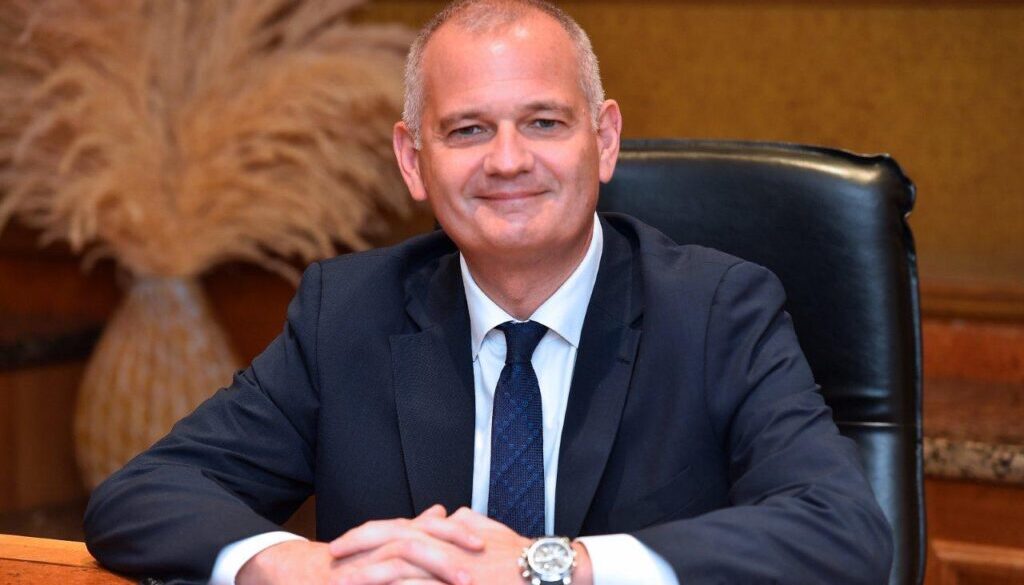
An exclusive interview with Mr. Mathieu Greppo, General Manager of InterContinental Phoenicia Beirut, on leading with vision, delivering value, and reinforcing resilience amid Lebanon’s economic revival.
Editorial Introduction
In a region where hospitality is not merely a service but a reflection of national identity, few institutions hold the emblematic power of the InterContinental Phoenicia Beirut. In this exclusive interview, Banking Executive Magazine sits down with Mr. Mathieu Greppo, General Manager of InterContinental Phoenicia Beirut Hotel, to explore how this iconic hotel continues to navigate change while safeguarding its legacy. With insights shaped by a global career and a deep understanding of leadership under pressure, Mr. Greppo offers a compelling view into how Phoenicia has become more than a luxury destination—it is a symbol of resilience, continuity, and Lebanon’s enduring appeal. For decision-makers, investors, and professionals shaping the future of the Arab world, this conversation offers rare perspective on what it means to lead with purpose in a time of transformation.
The Interview
Q: Mr. Greppo, thank you for joining us. Could you begin by telling our readers about your professional journey and the key milestones that shaped your leadership approach in the hospitality sector?
A: Thank you. My hospitality journey began in 1993 in Paris at the InterContinental Le Grand, a landmark property that instilled in me a profound appreciation for excellence in service. Over the decades, I’ve worked across diverse regions, including Russia, Central Asia, Africa, Jordan, and the UAE. These experiences taught me the critical value of adaptability and cultural intelligence. Each destination presented different social and economic environments that enriched my leadership style and shaped how I navigate uncertainty.
Beirut was a particularly meaningful assignment—not only because of the iconic status of the Phoenicia Hotel, but also due to the cultural depth of Lebanon. Phoenicia isn’t just a hotel—it is a living institution. Joining it was a professional and personal privilege, and I saw in it an opportunity to contribute to something much larger than hospitality: a symbol of continuity, optimism, and national pride.
Q: How would you define the spirit or DNA of the Phoenicia Hotel? What makes it stand out in the regional and international hospitality landscape?
A: Phoenicia is undeniably unique. It is a destination in its own right. Guests often refer to it simply as “the Phoenicia,” without needing to mention the brand. That alone reflects its stature.
Established in 1961 and rejuvenated with a $100 million investment in 2000, Phoenicia has witnessed and withstood significant developments. Its presence extends beyond its physical structure—it is woven into the social, cultural, and even economic fabric of Beirut. Many describe it as a benchmark: when Phoenicia is thriving, there’s a sense that the country is on a positive path. This symbolic role comes with responsibilities that we embrace daily.
What truly defines its DNA is a combination of understated luxury, timeless elegance, and a deeply human-centered service philosophy. It’s not about opulence alone, but about how we make people feel. Our people—many of whom have been with us for decades—are the heartbeat of the hotel.
Q: Considering the legacy and high expectations surrounding Phoenicia, how do you balance its historical identity with the need for modernization and competitiveness?
A: That balance is indeed delicate. On one hand, we have loyal guests who’ve known Phoenicia for decades. On the other, we must appeal to younger, tech-savvy travelers with different expectations.
We are preparing to embark on a comprehensive renovation starting February 2026, a process that will span three to four years and encompass all three towers, including the residences and various public spaces. However, we approach this transformation with great care. The essence of Phoenicia—its architectural character, its spirit, its service culture—must be preserved.
We’re updating our design with a focus on authenticity and comfort rather than fleeting trends. It’s about enhancing the guest journey, not overwhelming it with complexity. Similarly, our food and beverage offerings are evolving to reflect new culinary expectations while celebrating our rich tradition. We aim to be more than a hotel—we want to remain a symbol of Beirut’s dynamism.
Q: In the context of technological innovation, how is Phoenicia navigating digital transformation while maintaining its signature personalized service?
A: We adhere to a philosophy I like to call “high-touch over high-tech.” While we do invest in technology, especially in areas like smart TVs, mobile integration, and Wi-Fi infrastructure, we avoid over-automation that may dilute the emotional experience.
Our guests come to Phoenicia expecting intuitive luxury. Many stay for two or three nights—hardly enough time to master overly sophisticated in-room systems. What they appreciate is seamless interaction, not digital complexity. Our renovation will include further tech upgrades, but always in support of, not in replacement for, human connection. Technology must enhance comfort, not overshadow it.
Q: Let’s shift the focus to your team. How do you cultivate a culture of loyalty and excellence among your staff, especially during challenging times?
A: Leadership in hospitality is fundamentally about people. At Phoenicia, nearly 30% of our employees have been with us since the reopening in 2000. That’s a remarkable figure, and it speaks to the sense of belonging and pride our team members feel.
We place significant emphasis on internal culture. When you join Phoenicia, your market value increases—not only because of our reputation, but because of the training, values, and experience we offer. Our staff is often described as an extension of the Phoenicia identity. They bring consistency, depth, and emotional intelligence to every guest interaction.
In a world where service can feel increasingly transactional, our people provide continuity and heart. That’s why even during difficult periods, the quality of our guest experience remains uncompromised.
Q: Phoenicia’s reopening in 2022 was considered a major signal of recovery in Lebanon. Can you elaborate on this?
A: Indeed, reopening Phoenicia sent a message of confidence—not just in hospitality, but in Lebanon’s long-term potential.
At a time when other hotels postponed their return to the market, we chose to reinvest. The decision was strategic. The moment Phoenicia is operational, international event organizers, investors, and diplomatic missions take note. It gives them a sense of stability, a reason to consider Beirut as a viable destination for business or high-level meetings.
Additionally, our large-scale banquet facilities have allowed us to host international summits and events, reinforcing Lebanon’s capacity to engage with the global community. It has a ripple effect: increased hotel bookings, restaurant activity, event planning—all sectors benefit.
Q: As Lebanon continues to reposition itself on the global tourism map, how can hotels like Phoenicia support the country’s economic resilience?
A: Hospitality is not an isolated sector—it’s a multiplier. Every traveler who comes to Lebanon generates value across industries: transport, retail, culture, and of course, banking.
Phoenicia’s operations contribute both directly and indirectly to this ecosystem. Moreover, by staying open during periods of uncertainty, we demonstrate trust and inspire others to do the same. We provide a physical and symbolic anchor in an ever-changing landscape.
However, challenges remain. Air connectivity, infrastructure quality, and accessibility need continued attention. Sustainable recovery requires coordination between the private and public sectors. Hotels can lead by example, but the environment must support this momentum.
Q: What are your views on the current supply-demand balance in Lebanon’s hotel market? And how do you see it evolving?
A: There is a notable gap between supply and demand, particularly in the capital. Beirut today does not have the hotel room availability one would expect of a capital city in the region. This limits the city’s ability to host large delegations or tourism surges.
Beyond luxury properties, it also needs a healthy expansion of mid-range hotels—three and four stars. These cater to a broader demographic and help drive volume-based tourism. The Lebanese diaspora, regional business travelers, and young explorers represent high potential. They need access to quality accommodations that are both affordable and dependable.
As the country stabilizes and visibility improves, I believe we’ll see increased investor interest. But we must align this with better transport access, regulatory facilitation, and incentives.
Q: What regional trends do you foresee influencing the MENA tourism sector over the next three to five years?
A: There’s a visible shift in traveler behavior across the region. Guests are prioritizing authentic experiences over standardized luxury. They want cultural immersion, culinary exploration, and personalized itineraries.
In the Gulf, the emphasis remains on infrastructure-driven tourism—mega-events, theme parks, futuristic resorts. Lebanon’s strength lies in its human capital and organic charm. That’s the competitive edge.
Looking forward, wellness tourism, gastronomy-led travel, and sustainability will shape market expectations. Phoenicia is adapting to this by designing programs and services that celebrate local culture while aligning with global standards.
Q: What message would you like to extend to our readers—executives, investors, and diplomats considering Lebanon as a destination?
A: I would simply say: experience it firsthand.
Lebanon is a country of contrasts, creativity, and resilience. Despite the challenges, it offers rare depth and diversity—from the Mediterranean coastline to the snowcapped mountains, from vibrant city life to serene heritage sites.
At InterContinental Phoenicia Beirut, we are more than a hotel. We are a reflection of the country’s enduring spirit. For investors, Lebanon remains a dynamic opportunity. For travelers, it offers a journey unlike any other.
Do not let external narratives define your impression. Come, see, engage—and you will understand why so many return again and again.
Editorial Conclusion:
As Mr. Greppo eloquently affirms, Phoenicia is not simply a hotel—it is a reflection of Beirut’s spirit: resilient, refined, and relentlessly forward-looking. For leaders in banking, diplomacy, and business, the insights shared here underscore the potential that lies in believing in places and people, even amid uncertainty. Lebanon remains a land of opportunity, and institutions like Phoenicia remind us that when vision meets commitment, legacy and progress can indeed go hand in hand.