The Cash Economy in the Arab World: From a Reality Shaped by Crises to an Opportunity to Reinforce Banking Trust
Cash reliance surged under crisis conditions
Hidden costs weaken financial system efficiency
Digital shift can rebuild banking trust
Over the past decade, Arab economies have witnessed a notable shift in how individuals and businesses approach the use of cash. Liquidity circulating outside the formal banking system has increased, and holding funds in physical form has become a preferred option for a broad segment of society. This trend did not emerge by design; rather, it reflects a response to exceptional circumstances that reinforced the appeal of immediate liquidity as a source of perceived security and control.
Yet, the expansion of a cash-based economy is not a sustainable trajectory. As more liquidity remains outside formal financial channels, the efficiency of financial intermediation declines, limiting the system’s ability to channel savings into productive investment. At the same time, reliance on cash imposes tangible operational costs on businesses—ranging from cash handling and storage to heightened exposure to logistical risks and the complexities of reconciliation and audit.
Beyond these direct costs, a cash-heavy environment constrains financial innovation. Modern financial solutions—such as instant payments, digital wallets, and advanced point-of-sale systems—depend fundamentally on the flow of funds through banking and digital infrastructures. When transactions remain outside these channels, the opportunity to build reliable data ecosystems is diminished. This, in turn, weakens decision-making capabilities, risk management frameworks, and financial planning for both individuals and institutions.
Reducing reliance on cash, therefore, presents a strategic opportunity to reintegrate liquidity into the formal financial system. Increased use of banking channels supports broader financial inclusion, enabling underserved segments to access savings, credit, insurance, and digital payment services. It also enhances transparency and contributes to greater efficiency across the economic cycle.
Importantly, the objective is not to eliminate cash, but to restore balance. Cash will remain a valid and necessary means of payment. However, it should no longer be the dominant one. The aim is to create an environment in which digital and banking transactions become the natural choice—driven by their advantages in cost, speed, and security.
Achieving this shift requires a coordinated and structured approach. First, financial institutions must develop accessible, user-friendly products tailored to low-income individuals and small businesses, reducing barriers to account ownership and digital engagement. Second, strengthening financial and digital literacy is essential to demonstrate the practical benefits of non-cash transactions, particularly in terms of organization, convenience, and expense management. Third, sustained investment in technological infrastructure and cybersecurity is critical to ensuring data protection and building lasting trust in digital platforms.
The private sector also has a central role to play. Encouraging electronic salary payments, adopting modern payment solutions across commerce and services, and offering incentives for customers who favor digital channels can collectively accelerate this transition. Each electronic transaction contributes incrementally to reducing the footprint of the cash economy.
Ultimately, limiting the dominance of cash is not an end in itself, but a means to enhance efficiency, improve resource allocation, and support the development of a more resilient and sustainable financial system. As digital banking services become more accessible and convenient than managing physical cash, the transition toward a less cash-dependent economy will occur organically—driven by trust and efficiency rather than compulsion.
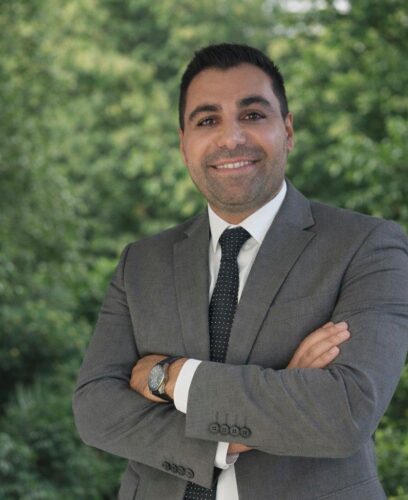
Dr. Mazen Haidar
Head of Sales and Retail Products – Credit Libanais SAL
Founder of SkillRise Academy